AI consulting for a growing business usually means working out where AI can save time, reduce costs, increase revenue and make operations run more smoothly, and then helping put the right tools and workflows in place.
It is not just about installing ChatGPT or buying software. Good AI consulting connects the technology to actual business goals.
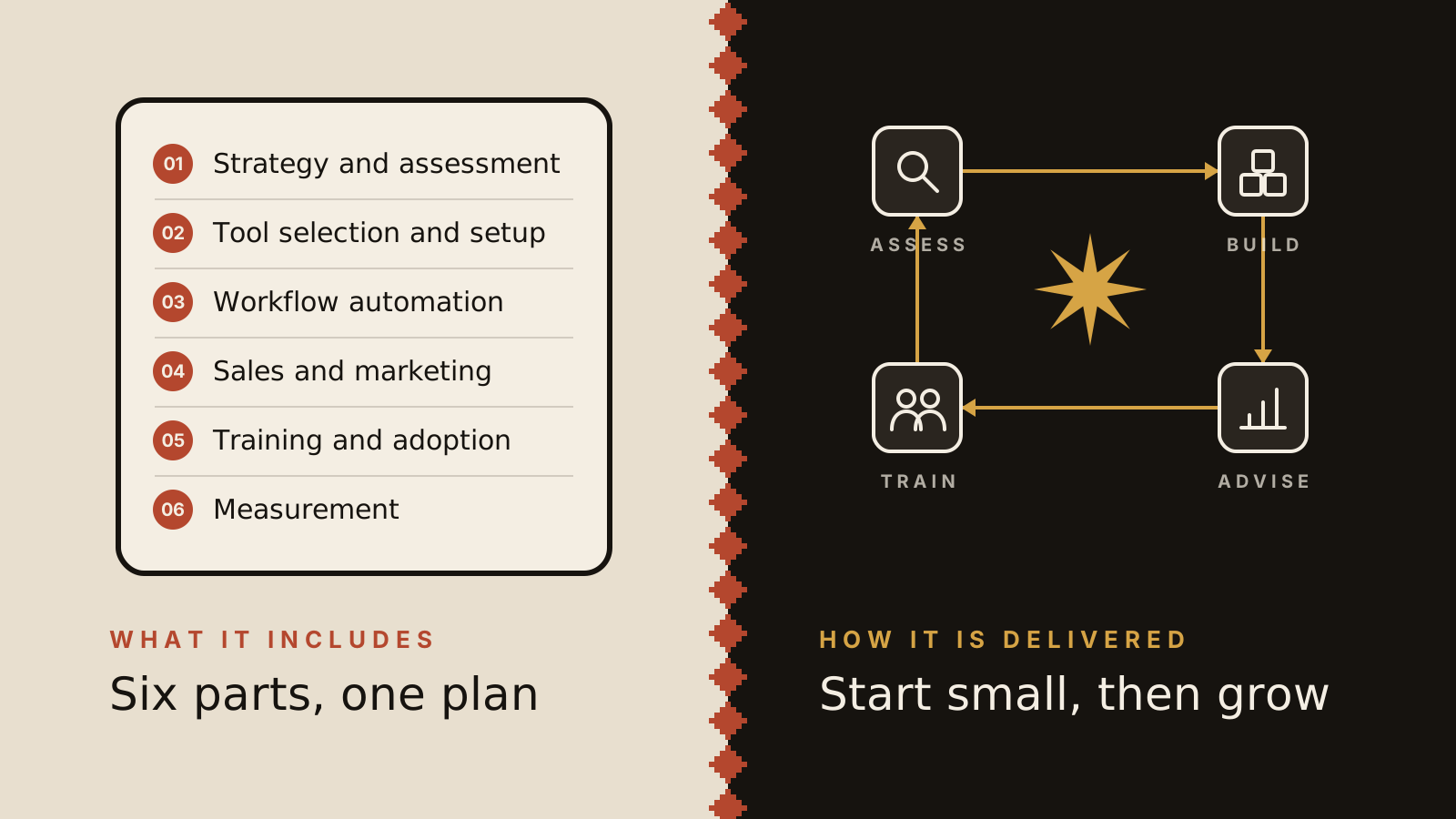
What AI consulting typically includes
1. AI strategy and business assessment
The consultant looks at how your business operates, where your people spend their time, and what is holding back growth. That usually means:
- Identifying repetitive, time-consuming tasks.
- Finding opportunities to reduce operating costs.
- Prioritizing AI projects by their likely return.
- Building an AI roadmap tied to your business goals.
This is where our AI transformation work starts.
2. AI tool selection and setup
The consultant chooses and configures the tools that fit your needs, and avoids adding software you do not need. Examples include:
- ChatGPT or other AI assistants for everyday work.
- AI-powered CRM and sales tools.
- Customer-support chatbots.
- AI tools for documents, reporting and research.
3. Workflow automation
This is often the most valuable part: connecting the systems you already use so that manual work disappears. For example:
- Capturing and qualifying new leads automatically.
- Drafting follow-up emails after customer inquiries.
- Extracting information from invoices and other documents.
- Generating recurring reports.
- Routing customer requests to the right person.
When a workflow needs reading, judgment or handling of exceptions, a custom AI agent can carry it through. When it is predictable, an ordinary automation is usually the better choice.
4. Sales and marketing
AI can help the business attract more customers and convert more of the opportunities it already has:
- Drafting and personalizing marketing content.
- Researching target markets and competitors.
- Improving lead scoring and sales follow-up.
- Repurposing content across email, social media and the website.
- Analyzing customer feedback and buying patterns.
5. Employee training and adoption
The team needs to know how to use AI well and safely. A consultant should help you:
- Train employees on practical AI tools.
- Create reusable prompts and standard operating procedures.
- Set guidelines for reviewing AI-generated work.
- Address privacy, security and accuracy risks.
Writing those procedures down so that people and agents can both follow them is what we call playbooking.
6. Measurement and ongoing improvement
Finally, the consultant should track whether the investment is actually improving the business:
- Hours saved and costs reduced.
- Sales conversion and response times.
- Quality and error rates.
- Which workflows to improve, and which successful projects to expand.
What this looks like in a growing business
Imagine a company with 15 employees that is winning more customers but struggling to keep up with the administrative work.
| Business problem | Possible AI solution |
|---|---|
| Leads go unanswered | Automated lead intake, qualification and follow-up |
| Employees spend hours on email | AI-assisted email drafting and response templates |
| Invoices need manual data entry | Document extraction and an automated accounting workflow |
| Customer questions take up staff time | An AI support assistant that hands off to a person |
| Reporting takes half a day | Automated weekly performance summaries |
| New hires need the same training again and again | An internal AI assistant based on approved company documents |
The goal is to help the company handle more business without having to grow its headcount at the same rate.
How AI consulting is usually delivered
There are four common types of engagement.
| Engagement | Usual format | What it covers |
|---|---|---|
| AI assessment | A short project with a defined scope | Reviewing operations, identifying opportunities, and delivering recommendations, priorities and an implementation plan |
| Implementation project | Fixed scope or milestone-based | Building and deploying specific automations, AI assistants, integrations or reporting |
| Training and enablement | Workshops or team training | Teaching employees to use AI tools, build repeatable workflows and follow company policies |
| Ongoing AI advisory | A monthly retainer | Strategic guidance, maintaining automations, evaluating new tools and improving results over time |
What it typically costs
Prices vary a lot with the consultant's experience, the complexity of your systems, and whether the consultant only advises or also builds. The ranges below are a broad planning guide for the U.S., not a survey of market rates:
| Engagement | Illustrative price range |
|---|---|
| Initial assessment or strategy session | $500 to $3,000 |
| Comprehensive AI roadmap | $2,000 to $10,000 or more |
| Workflow automation project | $2,000 to $15,000 or more |
| Complex integrations or custom AI systems | $10,000 to $50,000 or more |
| Ongoing advisory and improvement | $1,000 to $5,000 or more a month |
Software subscriptions, AI usage fees and third-party implementation costs may come on top.
For a growing business, the best starting point is usually a small, measurable project, not a large AI transformation program.
What separates good AI consulting from mediocre consulting
A strong consultant will:
- Start with business problems, not a list of fashionable AI tools.
- Quantify the likely benefit, including implementation and running costs.
- Build working solutions when implementation is part of the engagement, not just deliver a presentation.
- Integrate with your existing systems wherever practical.
- Address data security and human oversight.
- Agree on success measures before the work starts, and report the results afterwards.
Saving 20 staff-hours a week is a far more meaningful outcome than saying the company has "adopted AI." For more on comparing firms, see what to look for in an AI consulting firm.
Make this specific to your business
The scope changes a good deal from one business to the next. If you get in touch, tell us three things and we will suggest where to start:
- How many people work in the business. Fewer than five, 5 to 25, 26 to 100, or more than 100.
- Your main goal. Automating repetitive work and reducing costs, increasing sales, or improving operations and decisions.
- The help you want. Strategy and recommendations, hands-on implementation, or both.
AI consultingAI transformation
← All posts